AI pre-screening: every applicant gets an answer
A pre-screening interview chat and a bulk CV processor that sorts hundreds of applications in minutes, with a written reason for every decision.
 Mate MarschalkoFounder & ConsultantCompleted
- Expertise
- AI & Automation
- Type
- Prototype
- Status
- Completed
- Year
- 2023
- Focus
- Recruitment, HR Tech, GPT-4, Document Processing, Conversational AI
The project
Candidates hate applying into a void. Recruiters hate the void too. They're just buried under hundreds of applications per role, with no time to reply to everyone.
I built two small tools to fix both sides.
Tool one: the pre-screening chat
Before applying, candidates have a short conversation with an AI recruiter that has read the job description and their CV. It isn't trying to catch anyone out. It looks for deal-breakers: a missing core skill, a location that won't work, contract terms that don't fit.
I tested it on myself. Applying for a back-end Java role with a JavaScript CV, the interviewer asked fair, specific questions about Java, AWS, PostgreSQL and Kotlin, then declined kindly and with clear reasons. Applying for a front-end role, it picked up a subtle mismatch (I wanted remote, they said hybrid), asked about it, accepted "occasional visits to Gloucester, maybe once a month," and moved the application forward.
Both candidates walked away knowing exactly where they stood.
Tool two: the bulk CV processor
Paste in a job description of any length, choose what to screen on (location, skills, experience), drop in the CVs and press go. Each takes a few seconds, so 500 applications take roughly three to five minutes.
Every candidate gets:
- A one-to-five rating
- A verdict: good match, weak match or not matching
- A short, specific explanation
In my test of 44 CVs, 21 matched and 23 didn't. The reasons read like a sharp recruiter's notes. One rejected candidate was a Python machine learning engineer applying for a JavaScript role. Another lived abroad with none of the listed skills. One strong match lost a star for not mentioning a skill the role asked for, and the summary said so.
Doing this responsibly
Hiring decisions affect people's lives, so the rollout matters as much as the model.
- Start with the obvious. Location, right to work, contract type and availability are low-risk, objective filters, a sensible first step before anything involving judgement.
- Explain everything. Every decision comes with a reason a human can check and a candidate can understand.
- Keep humans in the loop. The tool sorts and summarises. People decide.
- Test for bias before and after go-live, on your own historical data.
Who this helps
Recruitment agencies, in-house talent teams and job boards. Anyone drowning in applications who'd like to give every candidate a fast, fair, specific response.
I build AI screening around your process, your ATS and your compliance needs. Let's talk about your hiring pipeline.
Related projects
All AI & Automation
Alex: an AI assistant that answers the phone
A voice agent that took recruiter calls, pitched skills, qualified roles, politely shut down sales calls and saw straight through scams.
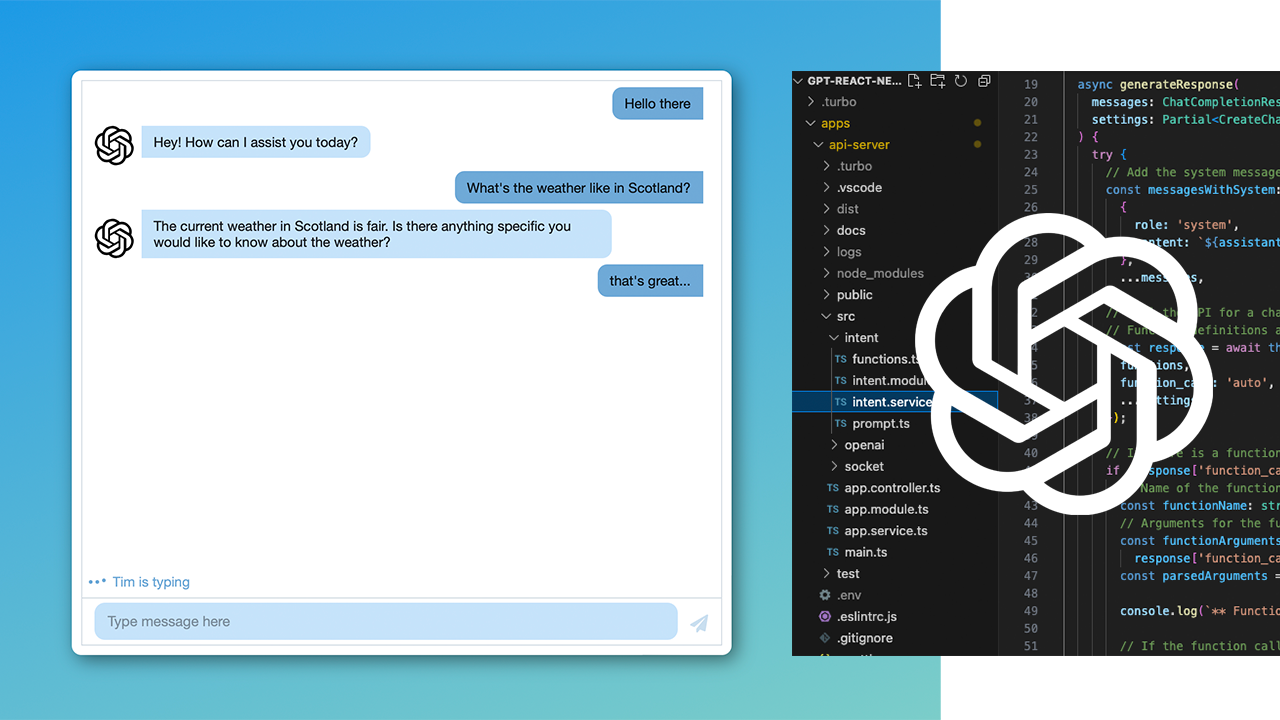
An AI drive-thru assistant, built in under a day
A GPT-4 ordering assistant that handles messy, mind-changing customers and outputs clean, structured orders.
AI car mechanic: expert diagnosis from a £20 scanner
A chat assistant that reads OBD fault codes, searches a technical knowledge base by meaning, and explains car problems in plain English.