Genetic UI: letting interfaces evolve
A 2018 experiment that treats a UI component as DNA, generates a thousand random variants, and lets natural selection find the one that works.
 Mate MarschalkoFounder & ConsultantCompleted
- Expertise
- Software Engineering
- Type
- Experiment
- Status
- Completed
- Year
- 2018
- Focus
- Genetic Algorithms, UX, Optimisation, React, Experiment
The project
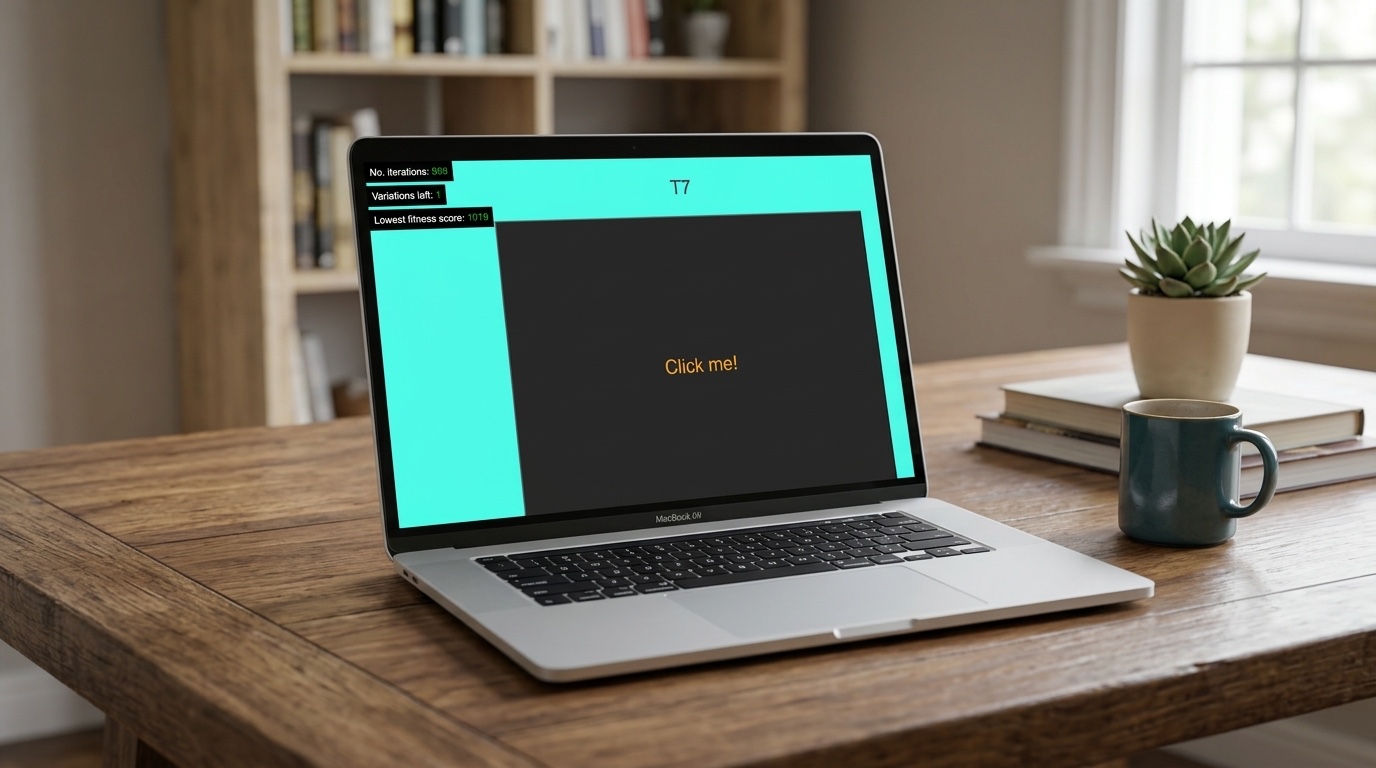
What if you didn't design a banner? What if you bred one?
That was the question behind Genetic UI, a small experiment I built in 2018 with two colleagues, Liran and Binu.
Design as DNA
Every visual decision in a component can be written down as a gene:
- Width, height and position
- Background colour and transparency
- Font size and font colour
- Copy length and the copy itself
- Call-to-action width, height, background and text colour
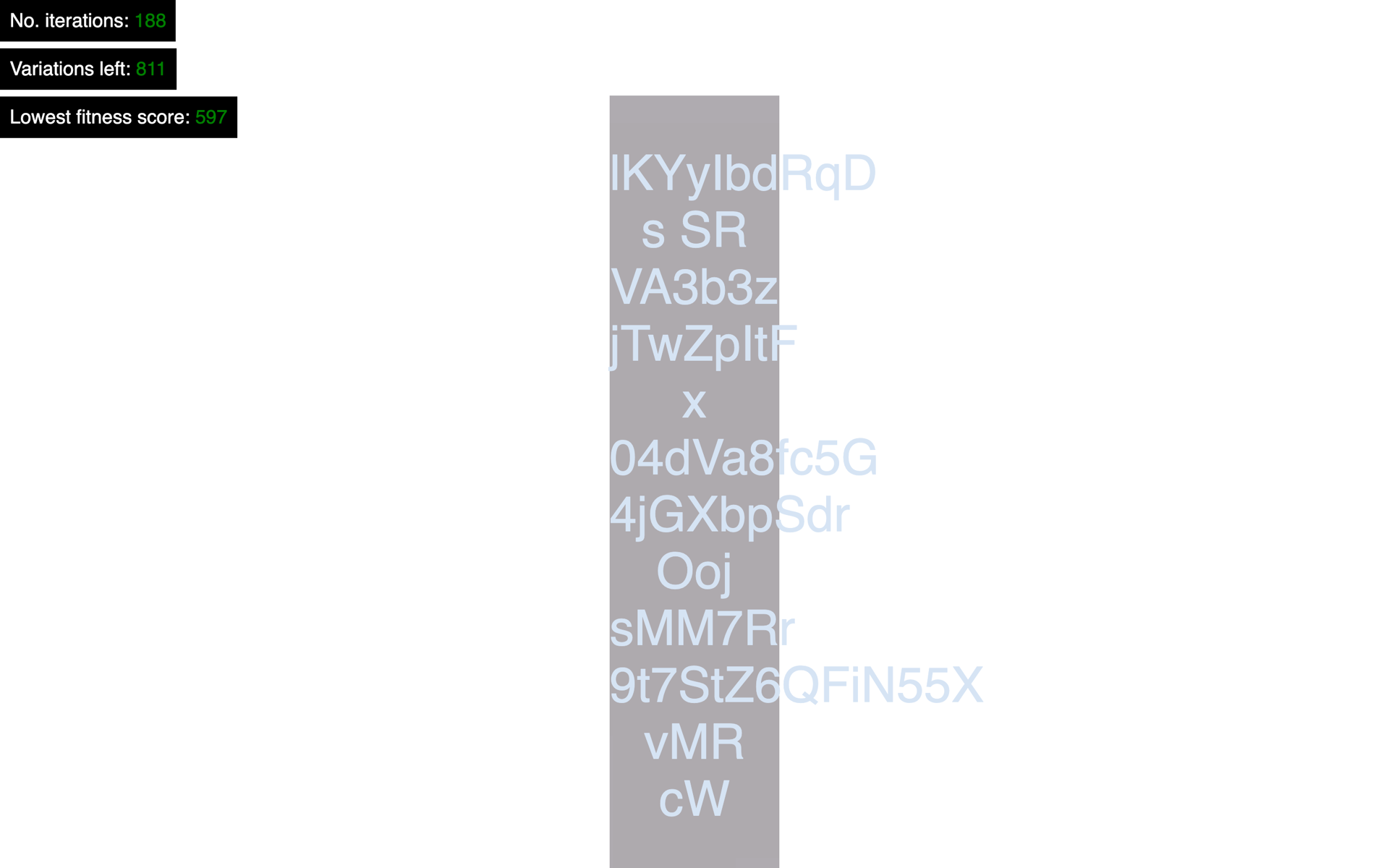
Generate random values for every gene and you've got one random UI. Do it a thousand times and you've got a population, most of it hideous.
Survival of the fittest
Each variant gets a fitness score. In the prototype, the fitness function encodes basic design sense: readable font sizes, contrast between text and background, saturated but not garish colours, shorter copy, a call-to-action big enough to hit. Every round, the weakest variant is removed.
We started with the full genetic toolkit: crossover between parents, random mutation for diversity. In the end, plain elimination gave cleaner, more predictable results, so that's what the final version uses.
After 998 rounds, one survivor is left. A bold short headline, strong contrast, and a call-to-action that's impossible to miss. Not pretty (2018 us had no taste filter) but it's clearly trying to be good.
The idea that's still worth chasing
The fitness function is where it gets interesting. Ours was hand-written rules. Swap it for real behaviour (clicks, sign-ups, purchases, time to complete a task) and you've got something far more powerful than A/B testing. Two variants become two hundred, continuously breeding towards whatever actually works for your audience.
And today's tools make it practical in ways 2018 didn't:
- Language models write sensible copy variants in place of random characters
- Design tokens and component libraries keep every mutation on-brand
- Vision models act as a first-pass critic, catching ugly or inaccessible variants before a user ever sees them
- Bandit algorithms shift traffic to winners quickly, so few people see the duds
Where it fits
Landing pages, onboarding flows, checkout steps, email layouts and in-app prompts. Anywhere small design decisions add up to real money and you have the traffic to learn from.
I like experiments that are a bit ahead of their time, and I know how to turn the good ones into production systems with sensible guardrails. If you're curious what evolving your interface could look like, let's talk.
Related projects
All Software Engineering
LLM Wizard: apps whose logic is written in plain English
An experiment in handing an app's business logic, UI generation and orchestration to a language model. It worked better than it had any right to.
Stracciatella: a modern web app architecture with no framework
Components, theming, inheritance and a Redux-style store in plain JavaScript. Proven in production on a luxury travel website.
An AI research agent that scouts business ideas while I sleep
Every morning a headless browser reads hundreds of Reddit complaints, an AI shortlists the real opportunities, researches the competition, and emails a digest.