Stracciatella: a modern web app architecture with no framework
Components, theming, inheritance and a Redux-style store in plain JavaScript. Proven in production on a luxury travel website.


- Expertise
- Software Engineering
- Type
- Product
- Status
- Live
- Year
- 2022
- Focus
- Vanilla JS, Architecture, Performance, CSS, Design Systems
The project
React is brilliant. I've used it on commercial projects for the best part of a decade. But for plenty of websites it's a lot of machinery for a job that doesn't need it.
So I asked a blunt question. Can you get everything good about a modern framework (components, state, theming, a clean file structure) with plain JavaScript and nothing else?
Yes. I called it Stracciatella, because it's vanilla with a twist.
Proven where it counts
This isn't a weekend toy. I used the same architecture to rebuild the website of a UK luxury travel agency. It went live and ran in production for over a year with no issues at all.
What you get when you start this way:
- A 100% Lighthouse performance score out of the gate
- No code you didn't write or don't need
- A codebase any JavaScript developer can understand completely
- Bugs that are easy to find, because there's nowhere for them to hide
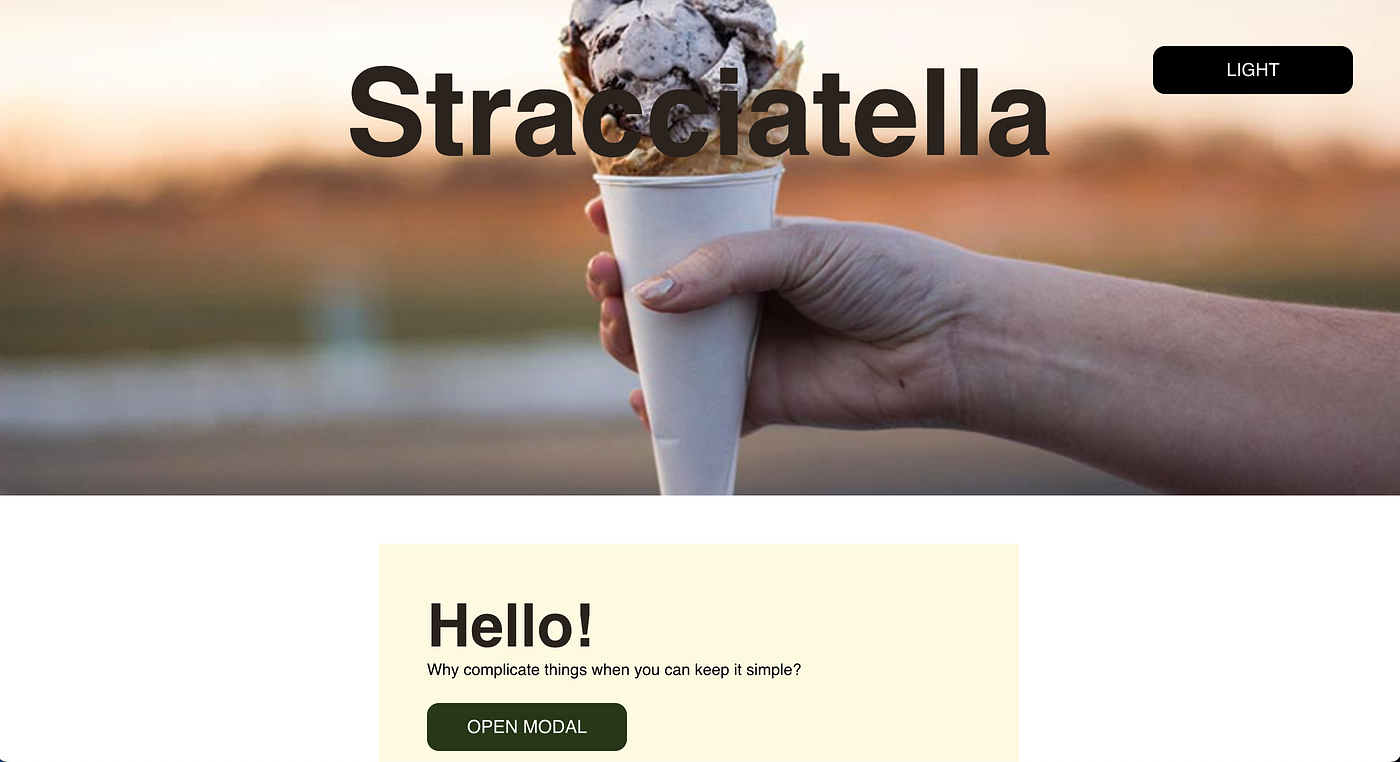
How it fits together
HTML components. Browsers can't import one HTML file into another, so a small Webpack plugin fills the gap. Components live in their own folders with their own markup and styles, and pages compose them with <include> tags, passing in values like props. A build step flattens it all into plain static HTML.
Two-layer theming. Brand values ($str-green, $str-cream) live in SCSS. Design roles (--primary, --accent, --background) are CSS custom properties built from them. Swap a theme by swapping roles, never by editing components. Dark mode is one class on the body.
Clear component types. Static styles, static components with no JavaScript, and full components backed by a class. Strict naming tells you instantly whether a style belongs to a component, a page or the whole site.
Classes and inheritance. A Button class wires up behaviour. A ThemeToggle extends it, inheriting the logic and the markup, then adds its own.
class ThemeToggle extends Button {
  constructor(el, onClick) {
    super(el, onClick);
    store.subscribeValue("brightnessTheme", (theme) => this.update(theme));
  }
}
A tiny store. Actions, a reducer and a store class with getState, dispatch and subscribeValue. About thirty lines, Redux-style, with listeners that fire only when the value they care about actually changes.

When I'd recommend it
Marketing sites, brochure sites, campaign pages and small web apps, anywhere speed, SEO and longevity matter more than heavy client-side interactivity. When a project genuinely needs a framework, I'll use one. The skill is knowing which is which.
That judgement is a big part of what I sell. If you're about to start a build, or your current site feels slow and over-engineered, let's have a look together.
Related projects
All Software Engineering
React IoT: building electronics like we build websites
Two ideas for bringing web-style structure to hardware: a markup language for physical devices, and React components that switch real lights and read real sensors.
Books and writing
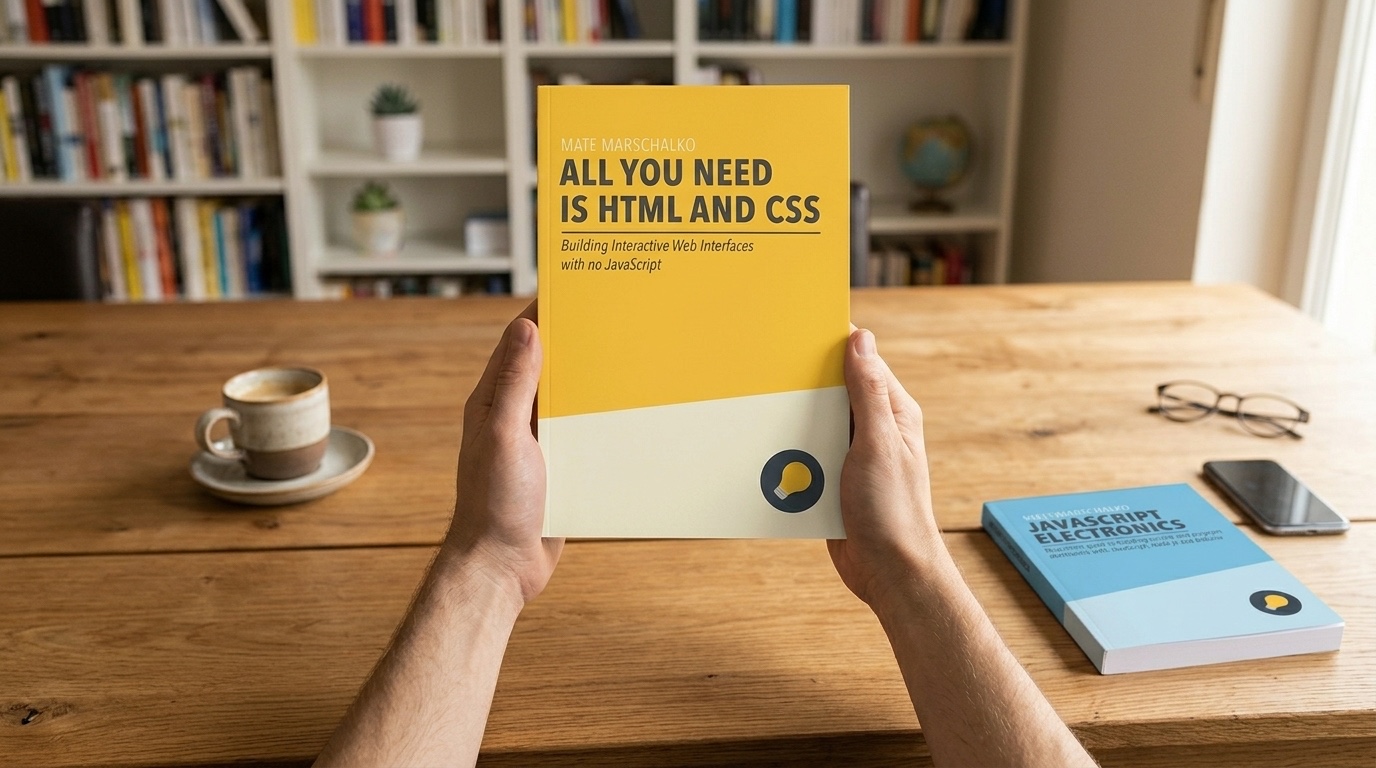
Three books on JavaScript electronics and no-JavaScript interfaces, plus years of articles and videos on AI, hardware and front-end engineering.

LLM Wizard: apps whose logic is written in plain English
An experiment in handing an app's business logic, UI generation and orchestration to a language model. It worked better than it had any right to.