Solar Energy Shield: a custom PCB that keeps projects alive off-grid
A battery and solar power board for the Arduino UNO, designed in EAGLE, manufactured, debugged and taken to production-ready.
 Mate MarschalkoFounder & ConsultantCompleted

- Expertise
- Hardware & Electronics
- Type
- Product
- Status
- Completed
- Year
- 2018
- Focus
- PCB Design, Solar, Arduino, EAGLE, Power
The project
Sensors in a garden. A camera on a fence post. A weather station on a roof. Every outdoor project hits the same wall sooner or later: there's no socket out there.
So I designed my own power board.
What it does
The Energy Shield clips straight onto an Arduino UNO. On board there's a 3.6 V lithium battery, a charging circuit and a boost converter that lifts the battery to a clean, regulated 5 V. That's what the Arduino wants, and it's what most USB devices want too, so a full-size USB port on the side can power other hardware. Or charge your phone in a pinch.
Charging happens two ways:
- Micro USB, from any phone charger
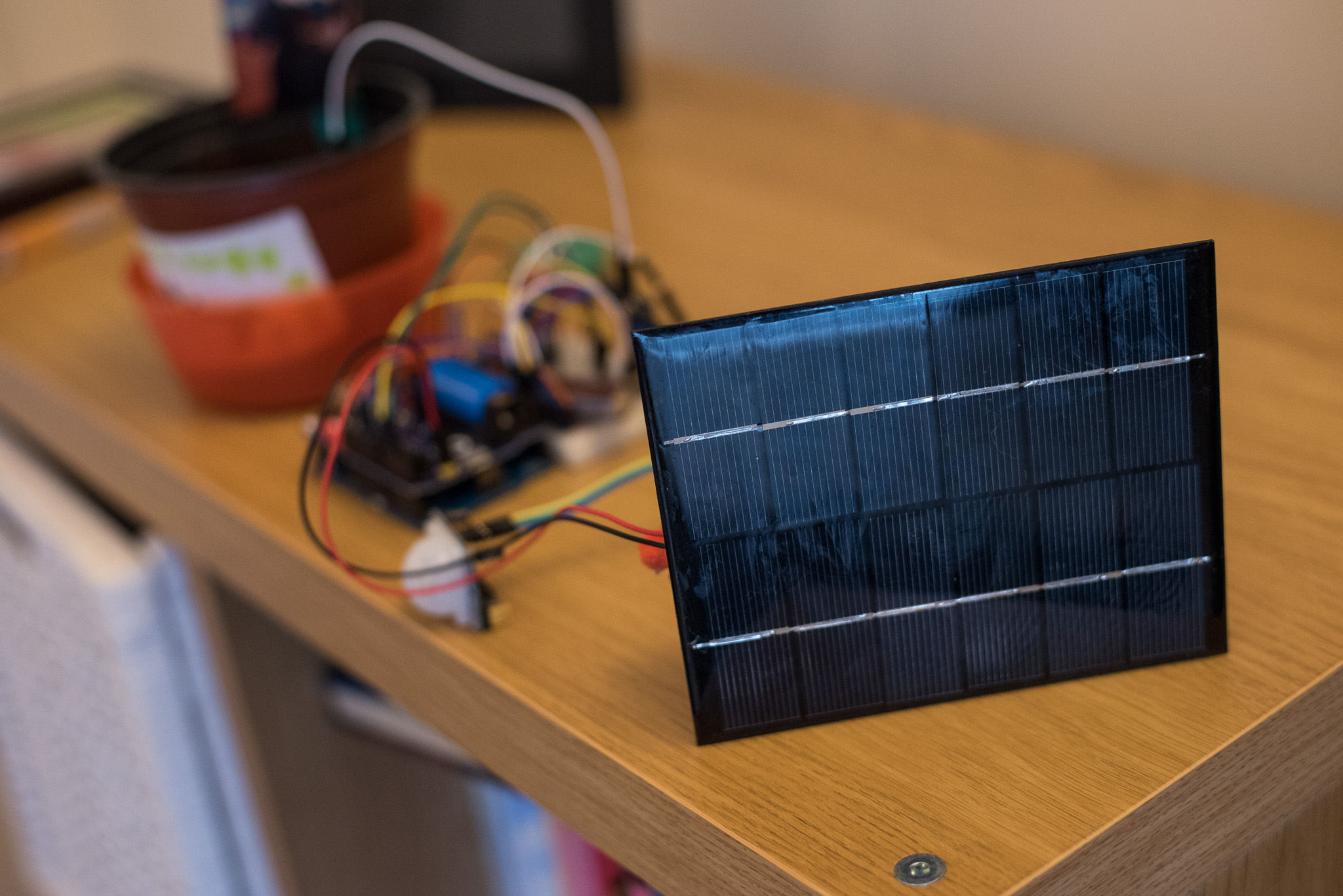
- Solar, through dedicated terminals for the panel that ships with the board
Pair the panel with a sensible sleep schedule and a project can run for weeks, months, or indefinitely. As long as the sun keeps turning up.

I tested it on Lili, one of my talking plants. She ran happily on sunlight alone.
From schematic to board
Off-the-shelf modules would have been quicker. They'd also have been bulkier, fiddlier to wire, and impossible to make my own.
The circuit was designed in EAGLE, with the charge and boost stages running at the same time to juggle input and output.
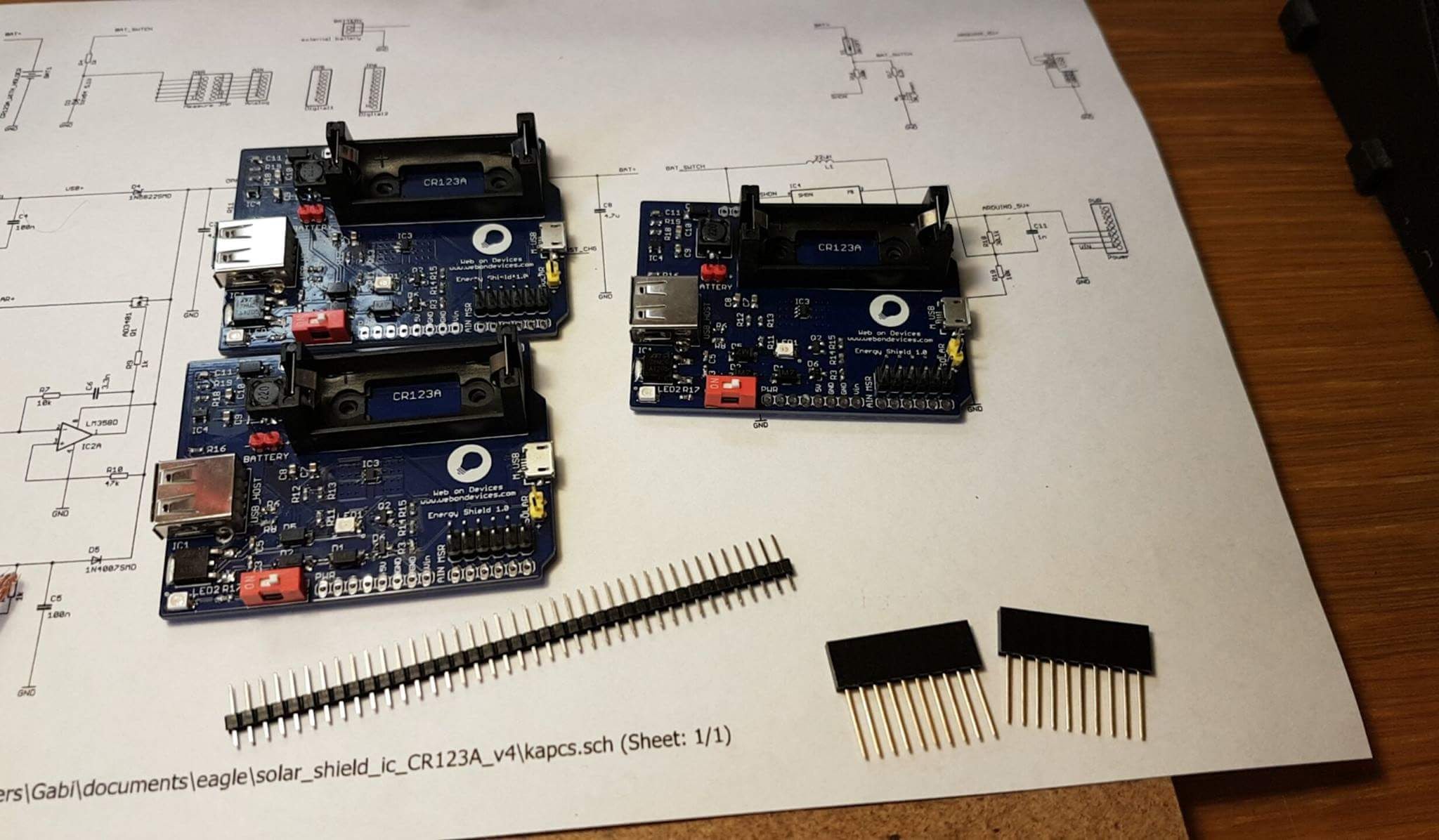
Then came the unglamorous part. Sourcing components in bulk, finding a PCB manufacturer, and assembling the first prototypes by hand.
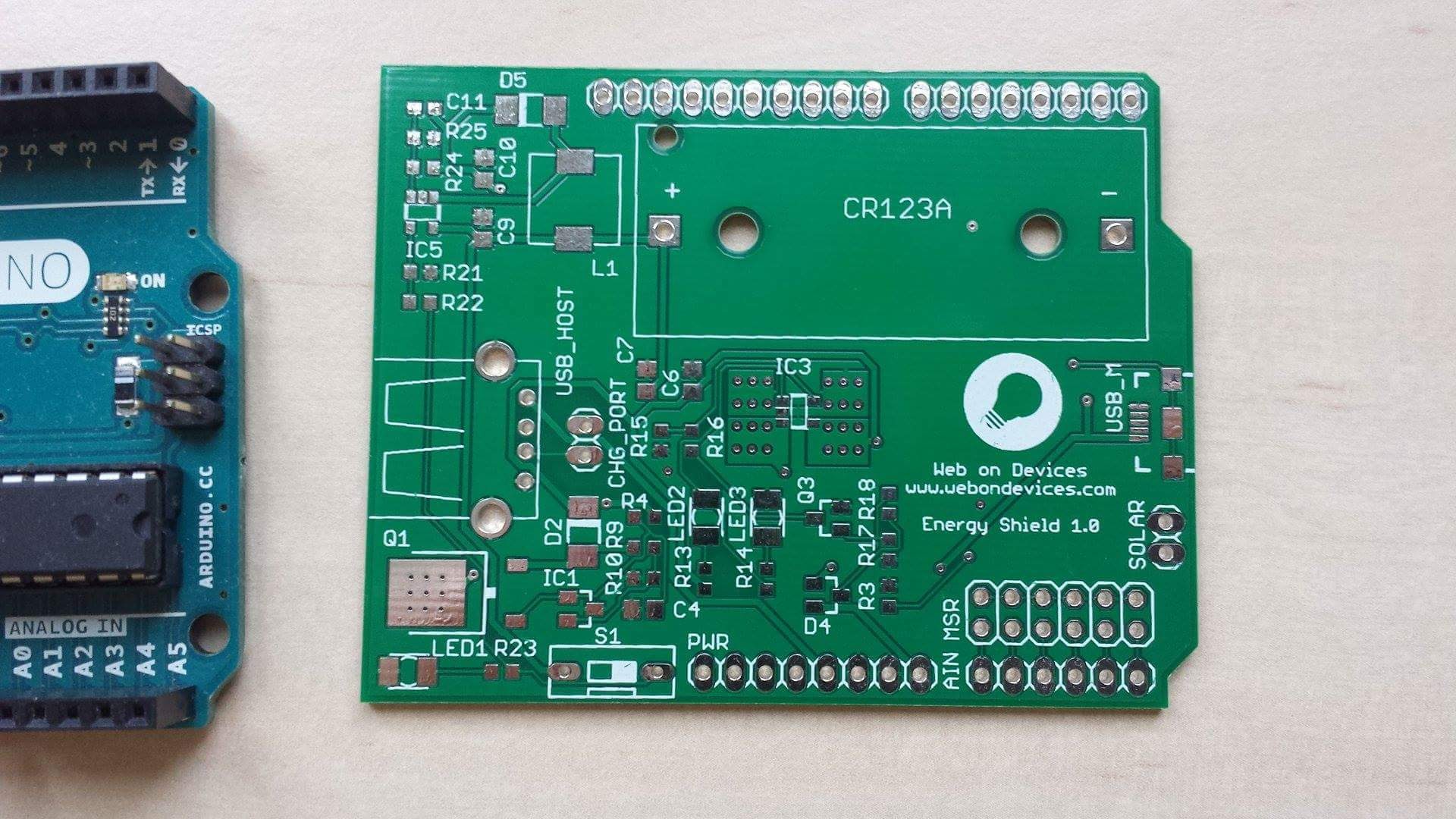
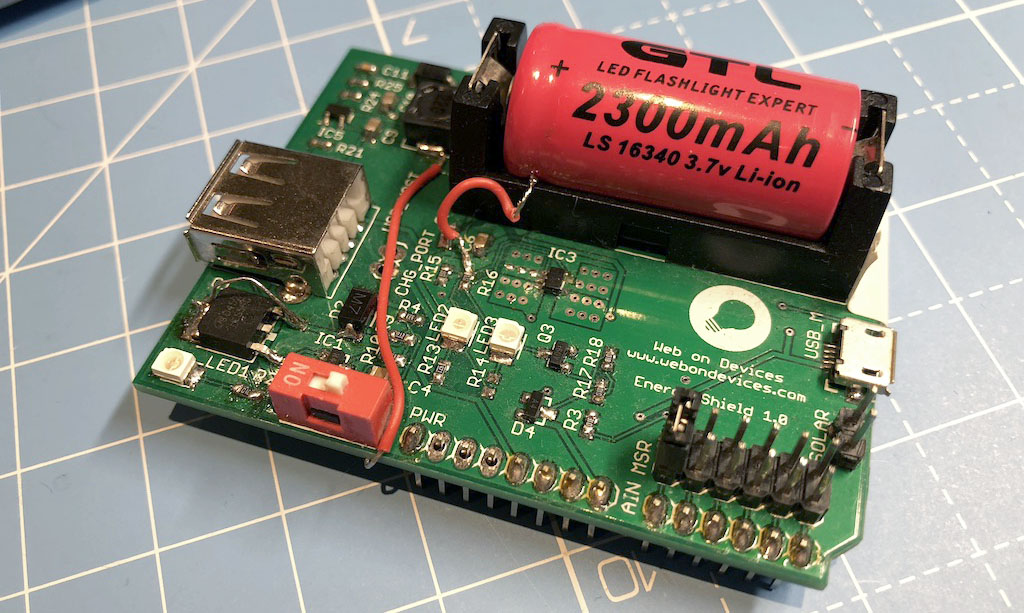
The first batch had mistakes. Most first batches do. I fixed the design, ordered a second run, and put the finished boards through a long stretch of testing.

Where it ended up
The board reached production-ready and went into a testing programme with early users. I never pushed it to a commercial launch, and that was a deliberate call. The point was proving I could take a circuit from a blank schematic to a working, manufacturable product.
I did.
Why this matters for your project
Custom hardware sounds expensive and slow. It usually isn't, if the person designing it also writes the software that runs on it. I can design the circuit, lay out the PCB, deal with manufacturers, and then build the firmware, the cloud side and the app on top. One pair of hands, no hand-offs.
If you've got a device that needs to live somewhere awkward, off-grid, battery-powered or just smaller than a dev board allows, let's talk.
Related projects
All Hardware & Electronics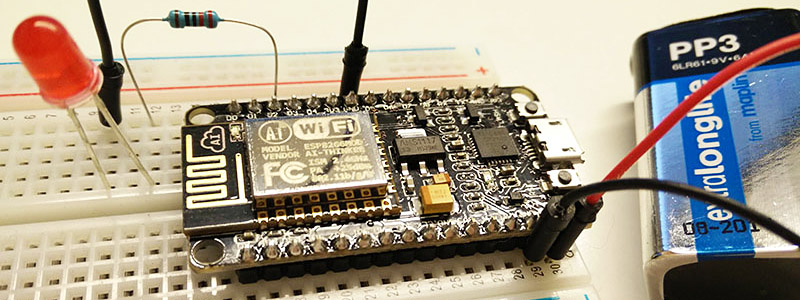
A $2 web server that can think
An ESP8266 chip running a web server on a 9V battery. Back then it switched a light. Today it can ask a language model what to do next.
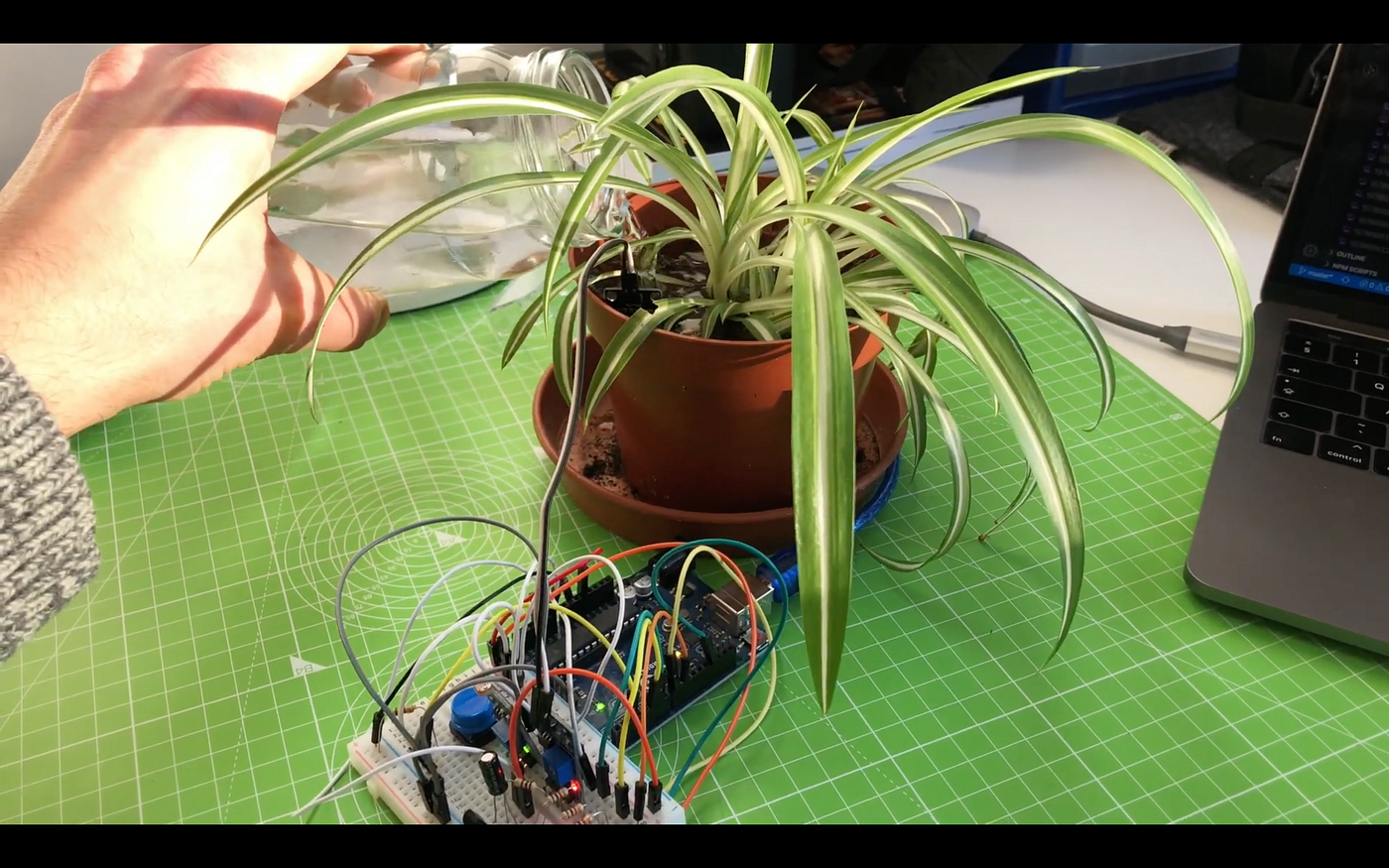
George II: a talking plant that sees, listens and remembers you
A desk plant with real sensors, face recognition, voice and memory. Cloud AI services stitched together into one character.