A $2 web server that can think
An ESP8266 chip running a web server on a 9V battery. Back then it switched a light. Today it can ask a language model what to do next.
 Mate MarschalkoFounder & ConsultantCompleted
- Expertise
- Hardware & Electronics
- Type
- Experiment
- Status
- Completed
- Year
- 2015
- Focus
- ESP8266, IoT, Edge AI, Wi-Fi, LLM
The project
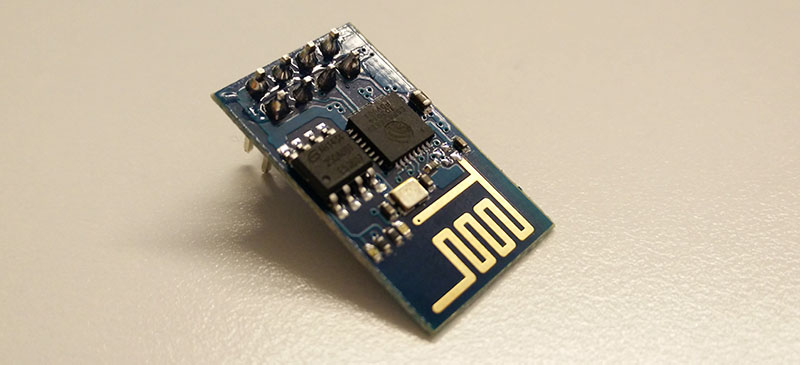
The chip costs a few cents. The board around it costs about $2. It has Wi-Fi, a 32-bit processor running at 80 MHz, and enough memory to serve web pages. Five times the clock speed of an Arduino UNO, in a module smaller than a postage stamp.
That's the ESP8266, and it changed how I think about "smart" devices.
A web server in your pocket
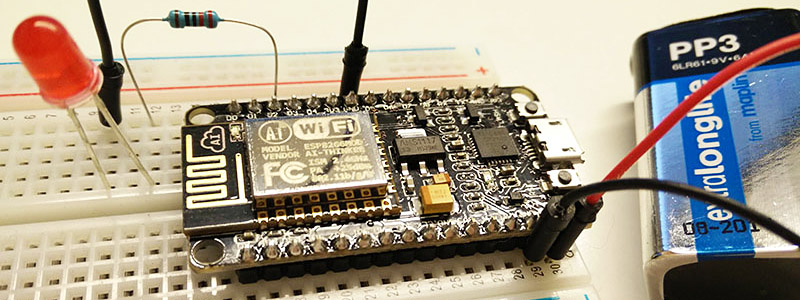
Back in 2015 I wired a NodeMCU board to a 9V battery and an LED, and loaded a small sketch. The board joined the Wi-Fi network, started an HTTP server, and served a page with two buttons. Tap On from any phone on the network and the light came on.
No hub. No cloud. No app store.

Nice demo. But the important part was the idea underneath: any physical object can have its own server. A lamp, a fridge, a door, a plant pot. Each one can expose a little API, and each one can talk to the internet.
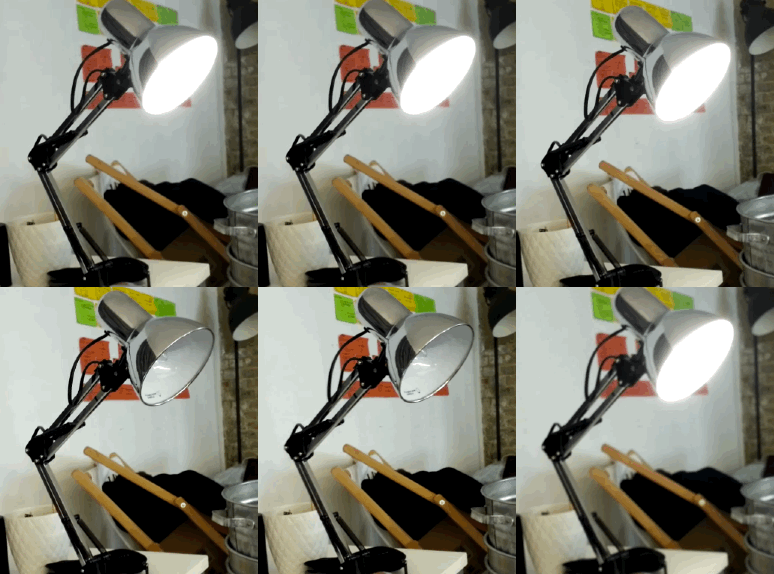
I used the same trick for a desk lamp that lights up when you get a notification.
Then the internet got a brain
If a device can call an API, it can call a language model.
That flips the design. Instead of hard-coding every rule (if temperature > 24, open vent), the device describes what it sees and asks for a decision. A small, fast, cheap model is perfect here. It doesn't need to write poetry. It needs to read a handful of numbers, understand context, and reply with a clear action in JSON.
The pattern is simple:
- Sense. The chip reads its sensors.
- Describe. It sends a short, structured summary to the model, along with the time, the season, maybe a forecast.
- Decide. The model returns an action and a reason.
- Act. The chip flips a relay, moves a motor, sends an alert.
Rules break the moment the world does something you didn't plan for. A model can reason about the odd case.
A few things I'd love to build
A greenhouse that reads the weather. Soil moisture is low, but rain is forecast in two hours. A rule waters anyway. The model waits, saves water, and tells you why.
A shop fridge that notices patterns. Door-open counts, temperature drift, time of day. It spots that the door keeps getting left ajar after the lunchtime rush and flags it before stock spoils.
A care sensor that knows a normal morning. Kettle on, bathroom light, front door. When the routine shifts in a way that matters, a relative gets a calm, specific message. Ordinary variation doesn't set off an alarm.
A vending or coffee machine that diagnoses itself. It reads its own error states, works out the likely cause, and books the right engineer with the right part.
Each one runs on hardware costing a few pounds, with a model call costing a fraction of a penny.
What I bring
This sits right where my disciplines overlap: electronics, embedded firmware, cloud APIs and AI. I can prototype the device, design custom boards when off-the-shelf won't do, and build the decision layer and the dashboard that sits on top.
Got an object that should be smarter? Tell me about it.
Related projects
All Hardware & Electronics
Solar Energy Shield: a custom PCB that keeps projects alive off-grid
A battery and solar power board for the Arduino UNO, designed in EAGLE, manufactured, debugged and taken to production-ready.
React IoT: building electronics like we build websites
Two ideas for bringing web-style structure to hardware: a markup language for physical devices, and React components that switch real lights and read real sensors.

The smartest home assistant I could build
From a ChatGPT-powered Siri Shortcut to a real-time voice assistant that runs a whole HomeKit house, reads the calendar and checks the cameras.